You have zero followers, zero posts, and zero idea where to begin. That is the starting point for almost every personal brand that eventually gains traction. The good news: building a personal brand from scratch in 2026 does not require a massive audience, a viral moment, or a marketing budget. It requires a plan and the discipline to follow it for 90 days.
This is that plan. A week-by-week breakdown designed to help you start a personal brand from scratch, build momentum without burning out, and create the foundation for long-term growth. Every section includes concrete steps, templates you can copy, and data to back up why each phase matters.
Before we start, one important truth: the Digital Marketing Institute estimates that building a personal brand takes 6 to 12 months to gain real traction. The first 90 days are not about going viral. They are about establishing the habits and systems that make the next 9 months possible.
Weeks 1-2: Define Your Thesis and Pick Your Platform
Most people skip this phase entirely. They create an account, post something random, and wonder why nobody cares. The first two weeks are about laying the groundwork that makes everything else easier.
Find Your One-Sentence Thesis
Your thesis is the answer to this question: "What do I help people understand or accomplish?" It does not need to be clever. It needs to be specific.
Bad thesis: "I talk about marketing."
Good thesis: "I break down how freelance designers land their first $5K client."
A personal branding coach's 4-step beginner framework puts this first for a reason. Without a clear thesis, you will post about everything and attract nobody. Your thesis acts as a filter for every piece of content you create over the next 90 days.
Your action step: Write down 10 versions of your thesis. Pick the one that feels most specific. Share it with two people you trust and ask them what they think you would post about based on that sentence alone. If their answer matches your intention, you have your thesis.
Choose One Platform
This is where most beginners sabotage themselves. They create accounts on five platforms, post inconsistently on all of them, and make zero progress anywhere.
One creator's "start from scratch in 2026" framework emphasizes starting with a single platform and building depth before breadth. Pick the platform where your target audience already spends time.
- Threads: Fast-growing, conversation-driven, good for opinion-based content. Check our guide on the best times to post on Threads if this is your pick.
- LinkedIn: Professional audience, long-form friendly, strong organic reach in 2026.
- Bluesky: Tech-forward community, early-mover advantage still available.
Your action step: Choose one platform. Just one. You will add a second platform in Month 3.
Set Up Your Profile Like a Landing Page
Your profile is not a biography. It is a landing page. Every element should answer one question for a visitor: "Should I follow this person?"
Here is a simple profile framework:
- Name: Your real name (or a recognizable alias). No keywords stuffed in.
- Bio line 1: Your thesis (who you help and how).
- Bio line 2: A credibility signal (your role, a result you have achieved, or a relevant affiliation).
- Bio line 3: A call to action (what someone gets by following you).
- Profile photo: A clear headshot with good lighting. Not a logo, not a group photo.
- Link: Your website, newsletter signup, or a link-in-bio page.
Your action step: Rewrite your bio using this framework. Ask someone who does not know you to read it and tell you what they think you do. If they get it right, your profile works.
Weeks 3-4: Publish Your First 10 Posts
This is where building a personal brand gets real. You need to publish, even when it feels too early, even when you think nobody is watching. The goal is not perfection. The goal is reps.
Why 10 Posts Matters
Ten posts in two weeks means roughly one post every weekday. This pace is sustainable for most people and gives you enough data to start noticing what resonates. It also signals to the algorithm that you are an active creator, which improves distribution from day one.
Five Post Templates You Can Use Today
You do not need to stare at a blank screen. Use these templates to structure your first posts:
Template 1: The "Here's What I Learned" Post
Share a lesson from your work or life. Start with the lesson, then give the context.
Example: "The best client work I ever did started with saying no to the brief. The client asked for a full rebrand. What they actually needed was a landing page rewrite. Here is how I figured that out..."
Template 2: The "Myth vs. Reality" Post
Pick a common belief in your field and challenge it with your experience.
Example: "Myth: You need 10K followers before brands will work with you. Reality: I landed my first paid collaboration at 400 followers. The difference was not audience size. It was..."
Template 3: The "Step-by-Step" Post
Break a process into 3 to 5 clear steps. People save these posts, which boosts reach.
Example: "How I write a week of LinkedIn posts in 90 minutes: Step 1: Open my swipe file. Step 2: Pick three ideas. Step 3: Write the hook for each..."
Template 4: The "Unpopular Opinion" Post
Take a genuine stance on something in your industry. Not for shock value, but because you actually believe it.
Example: "Unpopular opinion: Content calendars matter more than content quality when you are starting out. Consistency builds trust faster than perfection ever will."
Template 5: The "Before and After" Post
Show a transformation, whether it is your own or a client's. Specifics make this template work.
Example: "6 months ago, my newsletter had 12 subscribers. All of them were family. Today it has 2,400. Here are the three changes that made the difference..."
Having a content calendar to organize these posts will save you from the "what should I post today" spiral. Even a simple spreadsheet with dates and topics removes the daily decision fatigue.
Batch Your Content
Do not write posts one at a time on the day you plan to publish. Set aside two hours on Sunday and write all five weekday posts. This is called batching, and it is the single biggest productivity unlock for new creators.
When you batch, you can also schedule your posts in advance, which means your content goes live even on days when you are busy or distracted.
Your action step: Block two hours this weekend. Write your first five posts using the templates above. Schedule them for the coming week. Then do it again the following weekend.
Month 2: Build Your Posting Rhythm and Start Engaging
You have your thesis. Your profile is set up. You have published your first 10 posts. Now it is time to build the two habits that separate people who grow from people who quit: consistent publishing and active engagement.
Post 3 to 5 Times Per Week
This is the cadence that balances growth with sustainability. Posting once a day is better if you can manage it, but 3 to 5 quality posts per week will outperform 7 rushed ones.
The key word here is rhythm. You are not trying to go viral. You are training yourself (and your audience) to expect content from you on a predictable schedule.
Buffer's data on posting consistency tells a compelling story. Accounts that posted consistently for 20 or more weeks out of a 26-week study period saw 450% more engagement than accounts that posted sporadically. Even accounts that posted consistently for just 5 to 19 out of 26 weeks saw a 340% engagement increase. The takeaway is clear: consistency compounds, and it compounds faster than most people expect.
Your action step: Pick your posting days. For example: Monday, Wednesday, Friday, and Saturday. Put them in your calendar as recurring events. Treat them like meetings you cannot cancel.
Comment on 10 Accounts Daily
Publishing content is only half the equation. The other half is engaging with other people's content. This is how you get noticed by people who do not yet follow you.
Here is the system: Identify 10 accounts in your niche that have an engaged audience. Each day, leave a thoughtful comment on their latest post. Not "Great post!" but a comment that adds a perspective, shares a relevant experience, or asks a genuine question.
This takes about 20 minutes per day. Over the course of Month 2, you will have left roughly 300 comments. A meaningful percentage of those will drive profile visits, and a portion of those visitors will follow you.
Your action step: Create a list of 20 accounts to rotate through. Bookmark them. Set a daily alarm for your commenting session. Track how many profile visits you get each week.
Experiment With Formats
By now you have published 20 to 30 posts. You should start noticing patterns. Some posts get more replies. Some get more reposts. Some get saved.
Use Month 2 to experiment with different formats:
- Text-only posts (observations, opinions, lessons)
- Carousel posts (step-by-step guides, listicles)
- Short video (talking head, screen recordings, tutorials)
- Thread/long-form (deep dives into a single topic)
You are not looking for your "thing" yet. You are gathering data. Pay attention to which formats feel natural to create and which ones your audience responds to. The overlap between those two is where you will focus in Month 3.
Month 3: Analyze, Double Down, and Expand
The final 30 days of your 90 day personal brand plan are about making strategic decisions based on real data, not guesses.
Review Your Numbers
Open your analytics. If your platform has native analytics, start there. Look at these metrics across your posts from the past 60 days:
- Impressions: Which posts got seen the most?
- Engagement rate: Which posts got the highest ratio of likes, comments, and reposts relative to impressions?
- Profile visits: Which posts drove the most new visitors to your profile?
- Follower growth: Were there specific days or posts that correlated with follower spikes?
Sort your posts by engagement rate. Your top five posts share something in common, whether it is the topic, the format, the hook style, or the posting time. Find that common thread.
Your action step: Export or screenshot your analytics. Identify your top 5 posts. Write down what they share. That pattern is your content direction for the next 90 days.
Double Down on Your Top Format
If your carousels consistently outperform your text posts, make carousels 60% of your content. If your opinion posts get twice the comments of your how-to posts, lean into opinions.
This is not about abandoning variety. It is about weighted experimentation. Keep 60% of your content in your proven format. Use the remaining 40% to keep testing new approaches.
The creators who grow fastest are not the ones who try everything equally. They are the ones who find what works and do more of it.
Add a Second Platform
You have spent two months building on one platform. You have a posting rhythm, a content library, and an understanding of what resonates. Now is the time to start a personal brand presence on a second platform.
The best approach is to cross-post your existing content rather than creating new content from scratch. Take your top-performing posts from Platform 1 and adapt them for Platform 2.
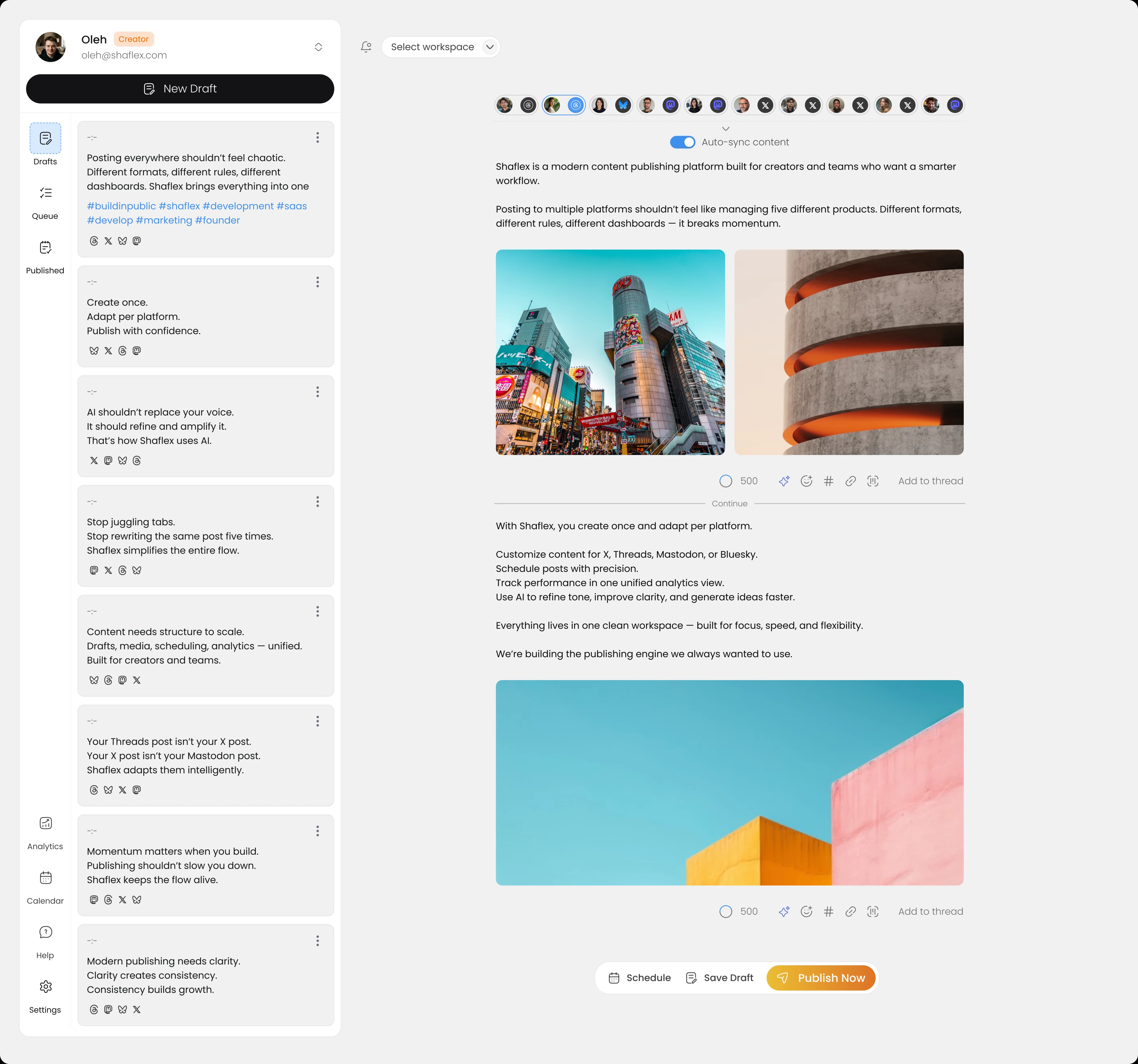
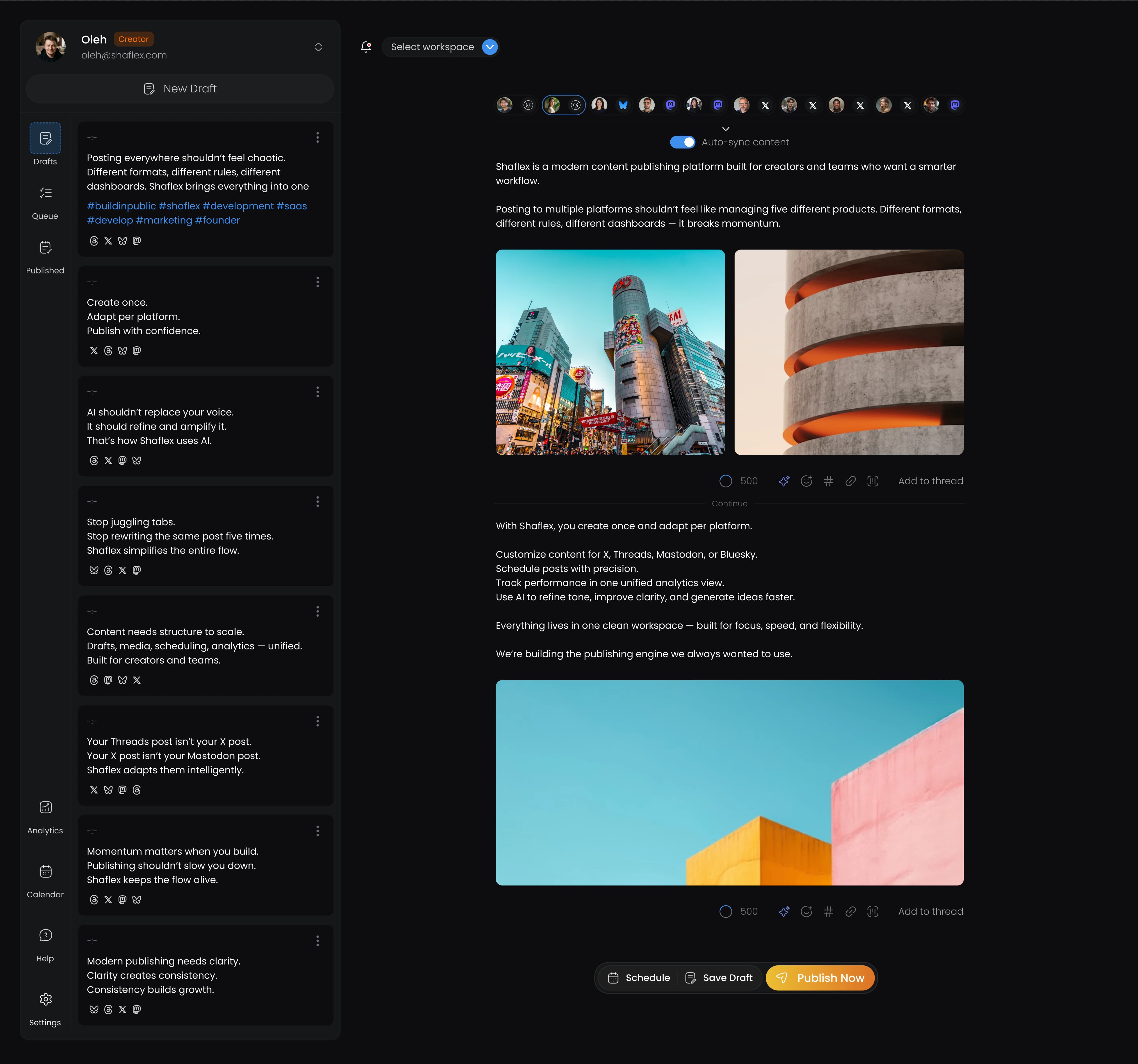
This is where a scheduling tool becomes essential. Managing two platforms manually will eat into the time you should spend creating content and engaging with your community. Use a tool like Shaflex to schedule posts across both platforms from a single dashboard.
Your action step: Pick your second platform. Adapt your top 10 posts for that platform's format and audience. Schedule them across the next two weeks.
The Consistency Data: Why This Plan Works
Let's return to the Buffer data because it is the strongest argument for following a structured plan.
Buffer studied posting consistency over a 26-week period and found two key data points. Accounts that posted consistently for 20 or more of those 26 weeks saw 450% more engagement compared to inconsistent accounts. Accounts that managed consistency for 5 to 19 of the 26 weeks still saw a 340% boost.
What does this mean for your 90 day personal brand plan? Ninety days is roughly 13 weeks. If you follow this plan and post consistently through all 13 weeks, you are placing yourself squarely in the trajectory of that 450% engagement group. You will not see the full effect at day 90, but you will have built the habit that unlocks it over the following months.
The creators who quit at week 4 or week 8 because "nothing is happening" are giving up right before the compounding begins.
What "Good Enough" Looks Like at Day 30, 60, and 90
One of the biggest reasons people abandon their personal brand early is unrealistic expectations. Here is what healthy progress actually looks like when you are building a personal brand from scratch.
Day 30: Foundation Set
- You have a clear thesis and a polished profile
- You have published 10 to 15 posts
- You are getting a handful of likes and maybe a few comments per post
- Follower count: anywhere from 20 to 100 new followers
- You have identified 2 to 3 post formats that feel comfortable to create
This is normal. If your posts are getting any engagement at all, you are on track. Most people have not even published 10 posts by this point.
Day 60: Rhythm Established
- You have published 30 to 40 posts total
- Your average engagement per post has increased (even slightly)
- You have a weekly content creation routine that you follow without thinking about it
- Your commenting habit has introduced you to 5 to 10 people in your niche
- Follower count: 100 to 500 new followers depending on platform and niche
The biggest win at day 60 is not the numbers. It is the fact that posting feels automatic. You are no longer agonizing over whether to post. You just do it.
Day 90: Data-Driven Direction
- You have published 50 to 60 posts total
- You know which format performs best for your audience
- You have expanded to a second platform
- You have a small but engaged community that recognizes your name
- Follower count: 300 to 1,000 new followers
At day 90, you are no longer starting from zero. You have a body of work, a posting habit, and real data about what your audience responds to. That is a foundation most people never build.
Why 6 to 12 Months Is the Real Timeline
The Digital Marketing Institute's research is clear: meaningful personal brand traction takes 6 to 12 months. The first 90 days are critical, but they are the setup phase, not the results phase.
Here is why that timeline matters:
Months 1-3 (this plan): You build the habits, find your voice, and establish your presence. Growth is slow but real.
Months 4-6: Compounding begins. Your content library drives ongoing discovery. Older posts continue to get shared. People start recognizing your name in comments and feeds.
Months 7-12: Real traction. Collaboration requests, speaking invitations, client inquiries, or whatever your personal brand goal is. This is where the 450% consistency effect becomes visible in your metrics.
The people who succeed at building a personal brand are not the ones who had a lucky break in week 3. They are the ones who kept posting in week 15 when it still felt like nobody was paying attention.
Start Your 90-Day Plan Today
You now have a complete framework for starting a personal brand from scratch in 2026. The plan is broken into phases for a reason: each phase builds on the one before it. Skipping ahead does not save time. It creates gaps.
Here is your quick-reference checklist:
Weeks 1-2: Define your thesis, pick one platform, optimize your profile.
Weeks 3-4: Publish your first 10 posts using the five templates. Start batching.
Month 2: Post 3 to 5 times per week. Comment on 10 accounts daily. Experiment with formats.
Month 3: Analyze your data. Double down on what works. Add a second platform.
The only thing this plan cannot do for you is start. That part is up to you.
If you are ready to take the scheduling, cross-posting, and analytics off your plate so you can focus on creating content, try Shaflex for free. It is built for exactly this stage of the journey: when you are building momentum and every minute counts.

 Apr 22, 2026