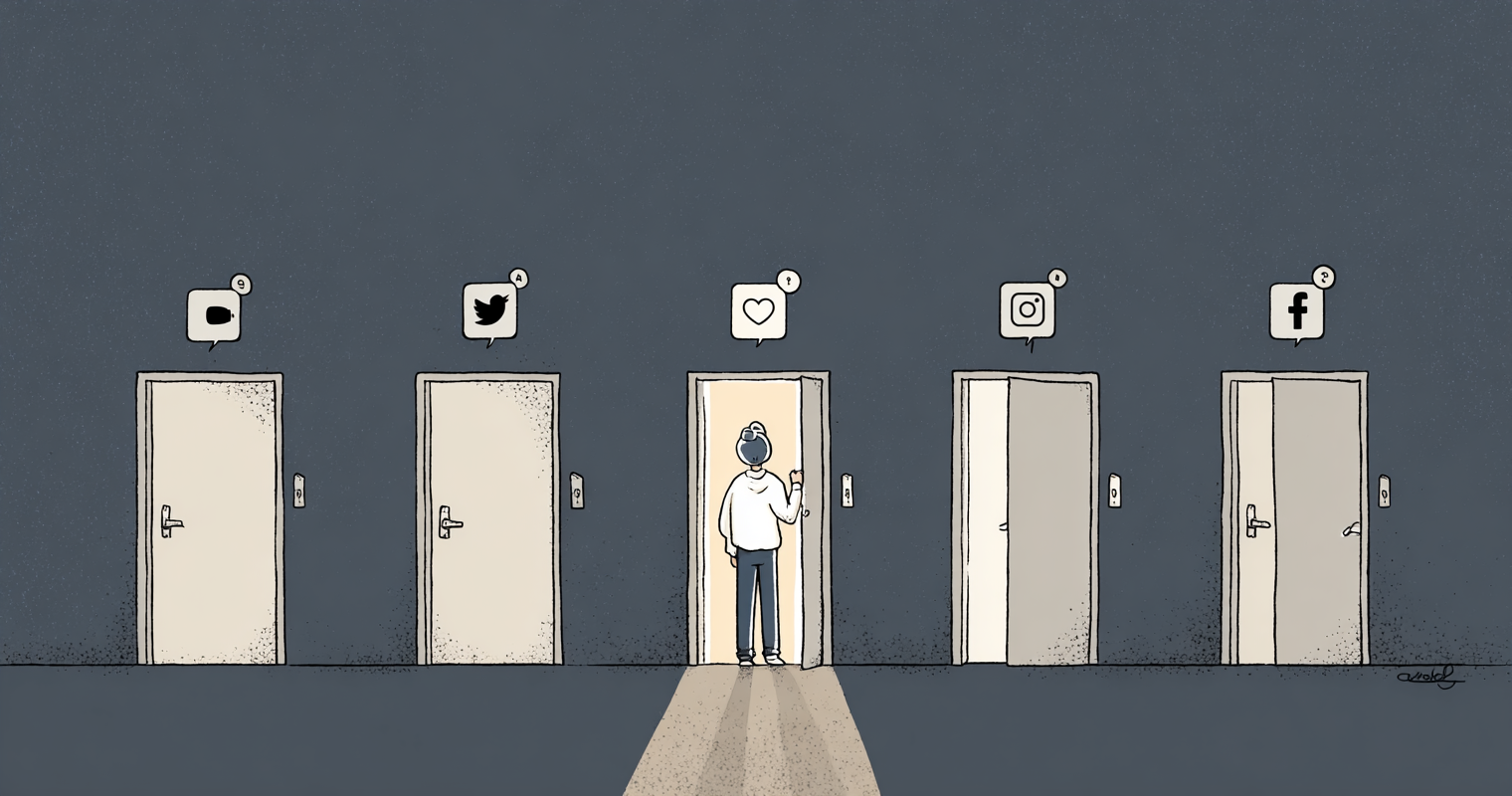
You do not need to be on every social media platform. In fact, trying to post everywhere is one of the fastest ways to burn out and build nothing meaningful. Finding the best platform for personal brand growth means narrowing your focus, not widening it. The strongest personal brands in 2026 share a common trait: they picked two platforms, went deep, and ignored the noise from everything else. This guide will help you figure out which platforms actually deserve your time and how to build a social media platform strategy that compounds instead of scatters.
The "be everywhere" myth and why it fails
The advice to "meet your audience where they are" sounds logical. But in practice, it translates to posting watered-down content across five or six platforms, never building real traction on any of them.
Branding agency co&co studied the habits of high-performing personal brands and found a clear pattern: the strongest brands stopped trying to be everywhere. Instead, they doubled down on one or two platforms where their audience was most active and most responsive. The result was deeper engagement, faster follower growth, and more inbound opportunities.
A SaaS founder and content strategist advocates for what he calls the "blueprint approach" to content. The idea is simple: create one core piece of content per week and distribute it strategically. But distribution does not mean posting the same thing in six places. It means choosing a primary platform for original content and a secondary platform for adapted repurposing.
One creator takes this even further. His advice: pick one platform and stay there until you have real traction. Only then should you expand. The reasoning is that each platform rewards consistency and depth. Posting once a week on five platforms signals to each algorithm (and each audience) that you are not serious about being there.
The math backs this up. If you have 10 hours per week for social media, splitting that across five platforms gives you 2 hours each. That is barely enough to post, let alone engage, reply, build relationships, and study what works. Concentrate those 10 hours on two platforms and you have 5 hours each. That is enough to build momentum.
Platform-by-platform breakdown: where does your brand fit?
Before you can choose, you need to understand what each platform offers, who uses it, and what kind of content performs. Here is a breakdown of the five text-first platforms most relevant to personal branding in 2026.
Best platform for personal brand: X (formerly Twitter)
Character limit: 280 characters per post
Audience: Journalists, founders, investors, tech workers, political commentators, media professionals.
Culture: Fast-paced, opinion-driven, news-reactive. X rewards hot takes, real-time commentary, and strong points of view. Threads and quote posts drive discussion.
Best for: People who think in headlines. If you can distill a big idea into a tight statement and enjoy real-time discourse, X is still the platform where ideas spread fastest. It is also where many journalists and media professionals still source stories.
Watch out for: The algorithm favors engagement over quality. Controversial posts get pushed harder than thoughtful ones. If your brand relies on nuance, X can be a challenging environment.
LinkedIn
Character limit: 3,000 characters per post
Audience: Professionals, B2B decision-makers, recruiters, consultants, founders, corporate teams.
Culture: Professional but increasingly personal. The best-performing LinkedIn content blends career insights with authentic stories. Long-form posts do well. The algorithm still rewards comments heavily.
Best for: B2B creators, consultants, job seekers, anyone whose audience is professional. LinkedIn is the one platform where your content directly connects to career and business outcomes. A single viral post can generate leads, job offers, or speaking invitations.
Watch out for: The platform has a specific tone. Content that works on X or Threads often falls flat on LinkedIn. You need to adapt, not just repost.
Bluesky
Character limit: 300 characters per post
Audience: Developers, indie hackers, open-source enthusiasts, early adopters, journalists who left X.
Culture: Community-driven, decentralized, anti-algorithmic. Bluesky runs on the AT Protocol and gives users control over their feeds through custom algorithms. The vibe is closer to early Twitter: conversational, curious, and community-oriented.
Best for: Technical creators, developers building in public, open-source maintainers, and anyone who values platform independence. For a deeper comparison of Bluesky and its closest competitor, read our Bluesky vs Threads breakdown.
Watch out for: The 300-character limit is tight. You need to be concise. The audience is still smaller than X or LinkedIn, so growth is slower but often higher quality.
Threads
Character limit: 500 characters per post
Audience: Mainstream consumers, Instagram users, lifestyle and culture creators, brands.
Culture: Casual, conversational, Instagram-adjacent. Threads benefits from Meta's network effect. The audience skews younger and broader than LinkedIn or Bluesky.
Best for: Lifestyle brands, creators with an existing Instagram following, anyone targeting a mainstream audience. The 500-character limit gives you more room than X or Bluesky for storytelling.
Watch out for: The algorithm is less transparent than Bluesky's, and Meta controls the rules. Organic reach can fluctuate without warning.
Mastodon
Character limit: 500 characters per post
Audience: Privacy advocates, open-source developers, academics, niche community members.
Culture: Decentralized, community-governed, anti-corporate. Each Mastodon instance has its own rules and culture. The platform attracts people who deliberately chose to leave centralized networks.
Best for: Niche community builders, academics, privacy-focused creators, and people who want to own their audience relationship. If Mastodon is on your radar, here is how to schedule Mastodon posts so you can stay consistent without living on the platform.
Watch out for: Discovery is harder than on algorithmic platforms. Growth depends on community participation rather than viral mechanics.
How to match your brand thesis to a platform's culture
Choosing a platform is not about picking the one with the most users. It is about finding the platform whose culture matches what you want to say and how you want to say it.
Start with your brand thesis. This is the one sentence that describes what you stand for and who you help. For example: "I help early-stage founders build products customers actually want." Or: "I document what I learn about design systems, one experiment at a time."
Now match that thesis to a platform's culture.
If your thesis is about professional growth, career insights, or B2B advice, LinkedIn is your primary platform. The audience is there specifically to advance their professional lives.
If your thesis is about building products, shipping code, or sharing technical knowledge, Bluesky is a strong primary choice. The developer community is engaged and growing.
If your thesis is about cultural commentary, media, or fast-moving ideas, X gives you the reach and the speed to participate in those conversations.
If your thesis is about lifestyle, personal development, or reaching a broad audience, Threads connects you to the mainstream.
If your thesis is about niche community building, privacy, or academic discourse, Mastodon's instance-based model lets you find your exact people.
The key insight is that platform selection in 2026 is not a technical decision. It is a cultural one. You are choosing a room to walk into, and you want to be in the room where your ideas resonate most naturally.
The primary/secondary model: go deep on one, repurpose to another
Once you have identified your primary platform, pick one secondary platform. This is the model that actually works for solo creators and small teams.
Primary platform: This is where you create original content. You spend 70% of your social media time here. You engage with replies, study what performs, build relationships, and develop your voice. Your primary platform is where your best ideas show up first.
Secondary platform: This is where you repurpose and adapt. You spend 30% of your time here. Content from your primary platform gets reworked to fit the secondary platform's format and culture. You maintain presence and catch a different audience segment, but you are not trying to build from scratch on two fronts simultaneously.
Here is what this looks like in practice.
Example: A developer advocate
- Primary: Bluesky (300-character insights about developer tools, building in public, engaging with the dev community)
- Secondary: LinkedIn (expand those Bluesky posts into longer 3,000-character pieces with professional framing, targeting hiring managers and CTOs)
Example: A marketing consultant
- Primary: LinkedIn (long-form posts about marketing strategy, case studies, career advice)
- Secondary: X (condense LinkedIn insights into punchy 280-character observations, engage with marketing Twitter)
Example: A lifestyle creator
- Primary: Threads (500-character personal stories, conversational tone, leaning into Instagram crossover audience)
- Secondary: Bluesky (shorter, more opinionated takes from the same content, reaching a different demographic)
The important thing is that content flows in one direction: from primary to secondary. You are not creating separate strategies for each platform. You are creating one strategy and adapting it.
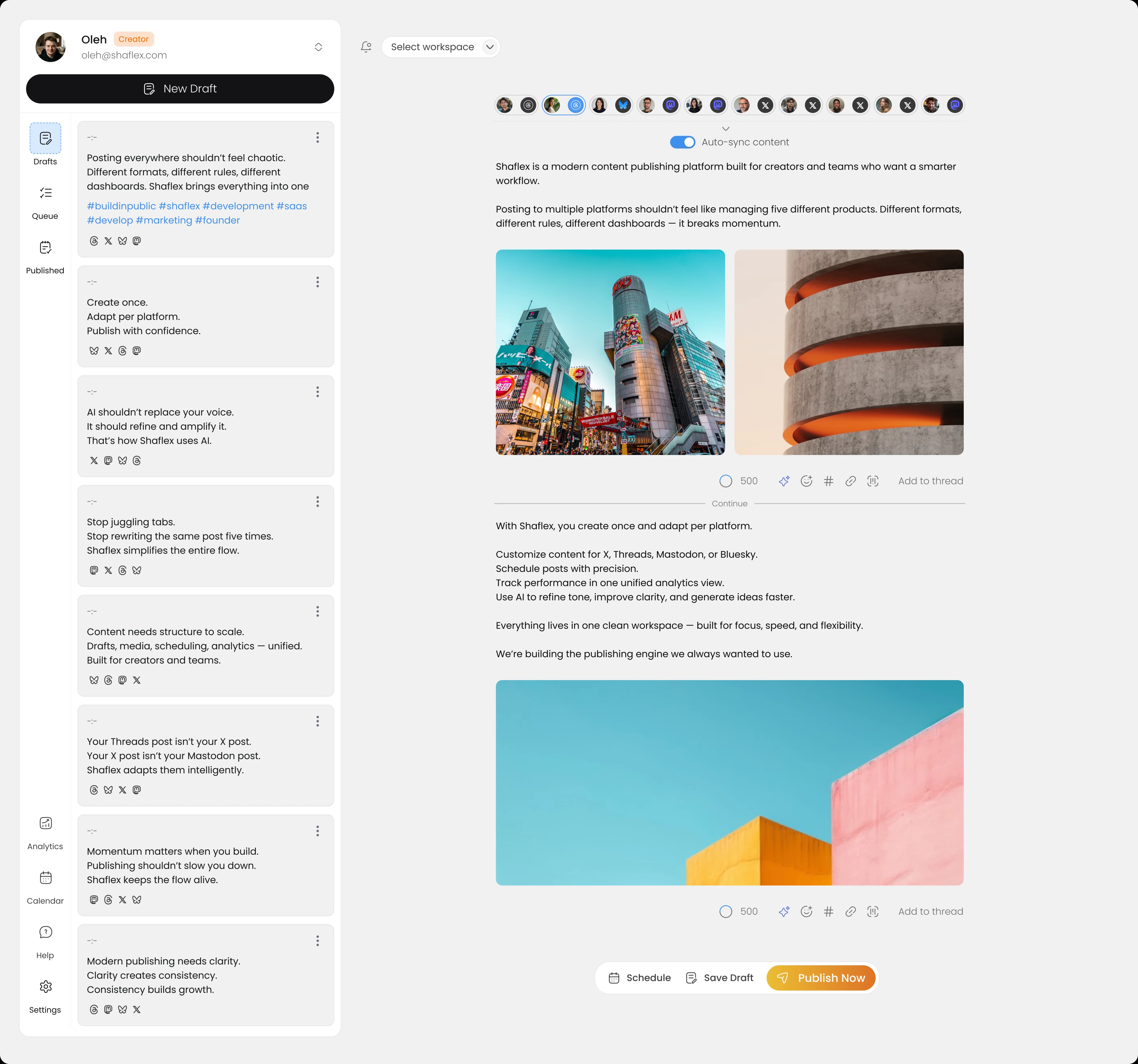
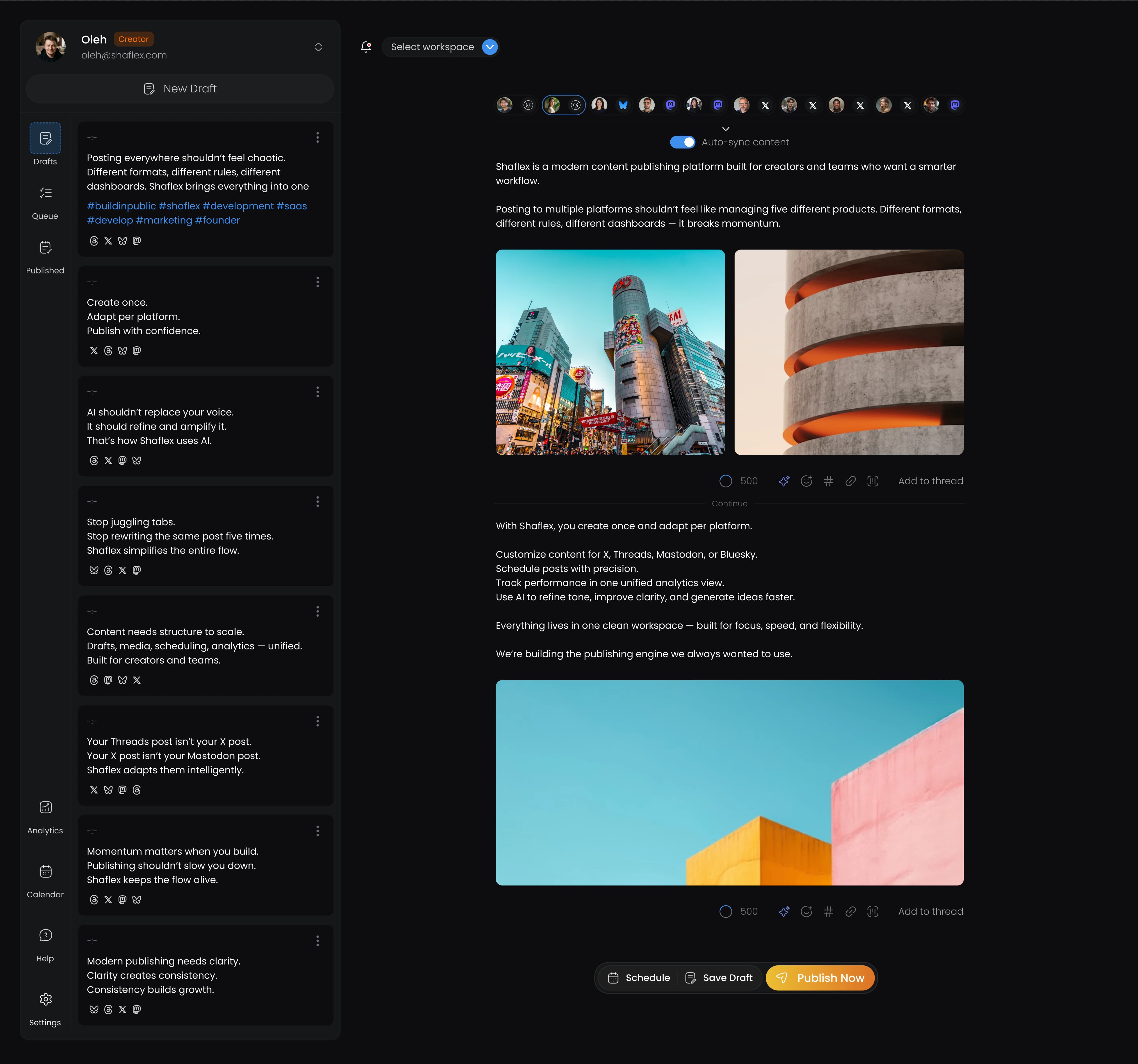
With a tool like Shaflex, you can write once and publish to multiple platforms at the same time, with each post automatically respecting the character limits of each platform. That turns a 30-minute content session into distribution across two or three platforms.
Which platform to choose: the decision framework
If you are still unsure, use this framework. Answer each question honestly.
1. Where does your target audience already spend time?
If you are targeting developers, check Bluesky and X. If you are targeting professionals, check LinkedIn. If you are targeting mainstream consumers, check Threads. Go where the people are, not where the hype is.
2. Which format matches your natural communication style?
If you think in short punchy statements, X and Bluesky suit you. If you naturally write longer reflections, LinkedIn is your space. If you are conversational and casual, Threads fits.
3. Where are your competitors or peers?
Look at people doing similar work. Where are they most active? Where are they getting the most engagement? That tells you where the audience for your niche already gathers.
4. What is your content production capacity?
If you can produce one substantial piece per week, the primary/secondary model works well. If you can barely manage three posts a week, stick to one platform until you build the habit.
This is not a permanent decision. You are choosing a starting point, not signing a contract. But you need to give your choice at least six months before you can evaluate whether it is working.
When to add a third platform (and when not to)
The temptation to expand hits around month three. You have built some traction on your primary platform, your secondary platform is ticking along, and you start eyeing a third.
Do not add a third platform until you meet all three of these criteria:
1. You have been consistent for at least six months. Not three months. Six. It takes that long to understand a platform's rhythm, build an audience, and develop a content system that does not depend on willpower alone.
2. Your primary platform runs on systems, not effort. If you still have to force yourself to post every day, you are not ready to split your attention further. Your primary platform should feel like a habit before you expand.
3. You have a clear reason tied to a goal. "Everyone is on Threads now" is not a reason. "My consulting clients are increasingly coming from Threads and I want to capture that channel" is a reason. The third platform should serve a specific business or brand objective.
When you do add a third platform, treat it like your secondary. Content flows from your primary platform. You are adapting and repurposing, not creating from scratch. The primary/secondary/tertiary model keeps your content engine running without tripling your workload.
People often underestimate how much social platforms function as search engines in their own right. When someone searches your name or topic on Bluesky, LinkedIn, or Threads, your consistent posting history is what shows up. That is another reason depth on fewer platforms beats shallow presence on many.
The case for owned platforms: newsletters, blogs, and communities
Social media platforms are rented land. You do not own your follower list, you do not control the algorithm, and the rules can change overnight. That is why the smartest personal brands in 2026 pair their social presence with at least one owned platform.
Newsletters give you a direct line to your audience. No algorithm sits between you and your subscribers. If LinkedIn changes its feed tomorrow, your newsletter list is unaffected.
Blogs build long-term search visibility. A blog post you write today can drive traffic for years. Social posts have a shelf life measured in hours. And when your social content links back to blog posts on your own domain, you are building an asset you control.
Communities (Discord servers, Slack groups, membership sites) create deeper relationships than any social platform can. They are where casual followers become advocates.
The ideal stack for a personal brand in 2026 looks like this:
- One primary social platform for reach and discovery
- One secondary social platform for expanded reach
- One owned channel (newsletter or blog) for depth and ownership
Social platforms bring people in. Your owned channel keeps them. This is platform selection 2026 at its most strategic: social media as the top of the funnel, owned media as the foundation.
How to schedule Bluesky posts and stay consistent across platforms
Consistency is the single biggest predictor of growth on any platform. But consistency across two or three platforms is genuinely hard if you are doing everything manually.
This is where scheduling tools change the equation. Instead of logging into each platform separately, you write your content in one session and schedule it across your chosen platforms. If Bluesky is one of your picks, here is a detailed guide on how to schedule Bluesky posts that walks through the entire workflow.
The goal is to separate content creation from content distribution. Batch your writing. Schedule your posts. Then spend your remaining time on the part that actually builds your brand: engaging with real people in replies and conversations.
Putting it all together
Here is the action plan:
- Write your brand thesis in one sentence. What do you stand for? Who do you help?
- Pick your primary platform based on culture match, audience fit, and your natural communication style.
- Pick your secondary platform based on where your remaining audience is and how easily your content adapts.
- Commit for six months. Post consistently on your primary platform. Repurpose to your secondary platform. Ignore everything else.
- Start one owned channel. A newsletter is the easiest entry point.
- After six months, evaluate. Look at follower growth, engagement rates, and inbound opportunities. Only then decide whether to add a third platform.
The personal brands that win in 2026 are not the ones posting everywhere. They are the ones who picked two platforms, showed up every day, and went deeper than anyone else in their niche.
Ready to publish to multiple platforms from one place? Start with Shaflex and manage your primary and secondary platforms without the context-switching.

 Apr 22, 2026